
Fencing · Materials
How long a wood fence lasts in the Illinois Valley, and what makes it last
Xcel Outdoor Living builds wood fences across the Illinois Valley out of Spring Valley, Illinois, serving Bureau, LaSalle, Putnam, Marshall, and Lee counties, and about six in ten of our fence jobs start by taking an old fence down, most of them wood.
Those old wood fences are usually around twenty years old, and the most common thing to have failed is the post, rotted at ground level, which is why we set ours in concrete at least 42 inches deep and offer PostMaster steel posts for a wood fence without that weak point.
About 5 minutes to read
What an old wood fence shows us when it comes down
These numbers come from our own jobs in the Illinois Valley, so they describe fences built and kept the way fences around here usually are.
- AgeMost of the wood fences we replace are around twenty years old, and one built well and kept well goes longer.
- How the posts were setAbout four in five had their posts in concrete, in footings smaller and shallower than the ones we pour today.
- What went firstThe post, rotted at ground level where water sits against the wood.
- What came nextThe run began to lean, and the fence lost its strength a section at a time.
The boards are rarely why a wood fence comes out, since a damaged board can be swapped on its own: one that splits, weathers or takes a hit. The post is different, because it carries everything hung on it while standing in wet ground.
Why the post goes first
A wood post lives in two places at once: damp below the soil, and dried by sun and wind above it. The few inches where those meet stay wet more often than not, which is where rot starts. A post can feel solid at the height you touch it and be soft at the ground line, so an old fence often looks fine until a storm pushes a section over.
Concrete keeps a post where it was put, and that is its job; however, most of the old fences we take down were set in concrete and still rotted at grade, because the concrete was holding the post rather than keeping the wood dry.
Shallow footings add a second problem, since the ground here freezes every winter and a post that stops inside the frozen layer gets lifted a little each year without ever quite settling back. That is the other reason so many older fences lean, and it is the whole subject of our post depth guide.
What makes a wood fence last
Everything that makes a wood fence last comes back to the post and the water around it.
- Posts set deep, in concrete. Ours go in at least 42 inches, below the frost line, so winter cannot lift them.
- Steel where the rot starts. We offer PostMaster steel posts for wood privacy fences, with the steel hidden behind the boards so you keep the look of a traditional wood fence and have no wood post in the ground.
- A base that dries out. Mulch heaped against the posts, a sprinkler aimed at the run and soil built up along the bottom all keep the wood wet where it is weakest, so keep the bottom of the fence clear and let it dry between rains.
- A finish, kept up. Left bare, wood weathers to silver, which plenty of people choose it for, while a stain or sealer holds the original color and goes back on when the wood starts to ask for it.
- A rail joint that holds. The rail carries every board on it, so when its connection to the post is built right, the run stays straight for as long as the posts do.
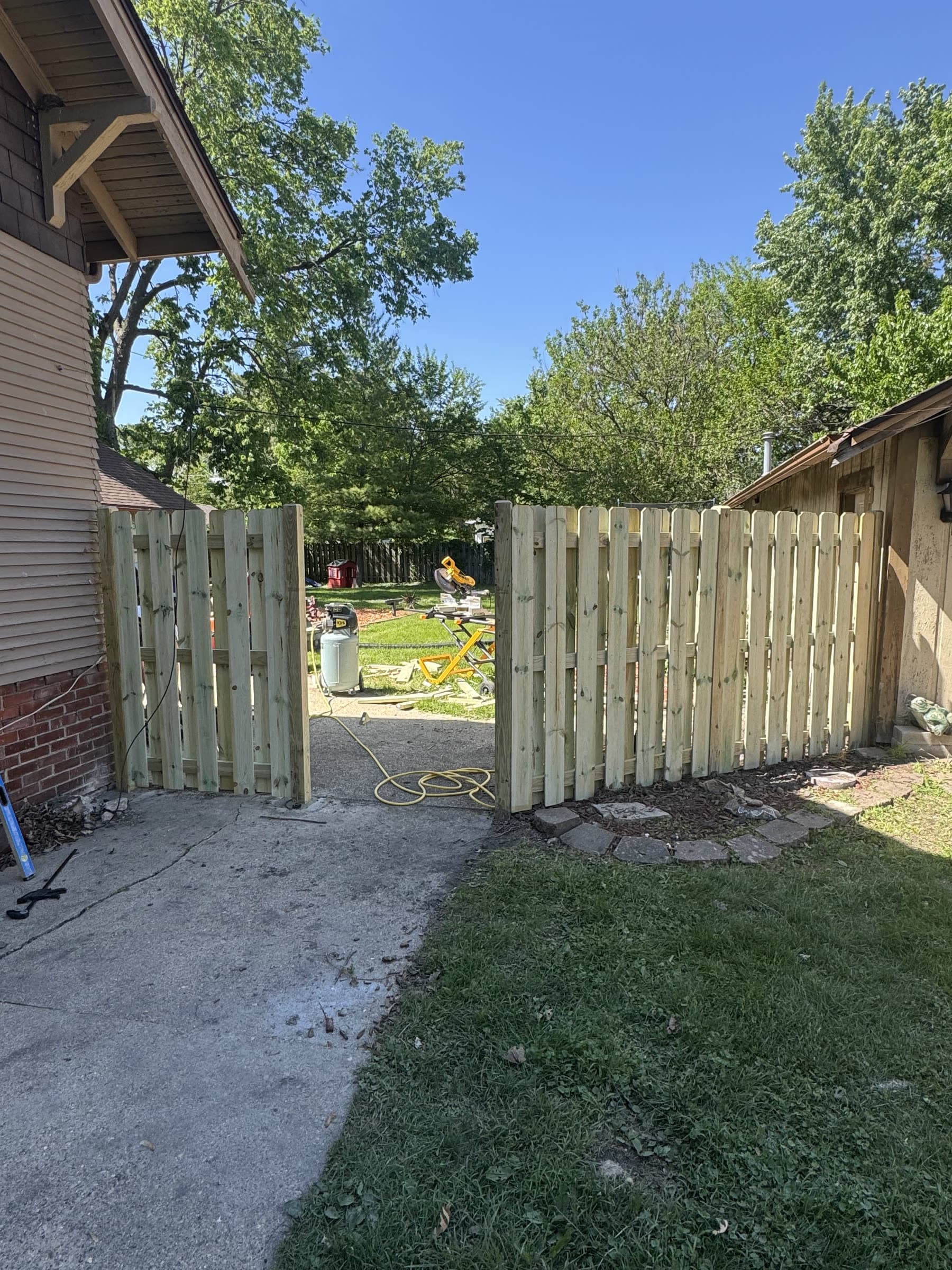
The choice between solid boards and shadowbox, and how each looks from your neighbor's side, is on our wood fence page.
Repair or replace an old one
Start with the posts by pushing on the fence near the ground at a few spots along the run. Sound posts with tired boards, or one section that took a hit, make a good repair, while posts that move at the base mean the fence is near the end of its life, because everything above them is only as straight as they are. We repair fences we did not build too, and the fence repair page walks through how that call gets made.
When it is time for a new one, we handle each step: we take the old fence down and haul it away, pull the permit, file the JULIE locate, set the new posts in concrete below the frost line, and clean up before we leave. Several towns here want a permit for a replacement as well as a new fence, and our permit guide covers which ones.
The walkthrough is free, and we can usually tell you on the day whether you are looking at a repair or a new fence.
Related questions
How long does a wood fence last in Illinois?
On the wood fences we replace in the Illinois Valley, around twenty years is typical, and how the fence was built and kept moves that number either way. Posts set deep in concrete and a base that dries out push it longer, while shallow footings and wet ground at the base bring it in sooner, so the post at ground level usually decides it.
What fails first on a wood fence?
The post, at ground level, because that is where moisture sits against the wood and where it rots first. Once the posts go, the fence leans or loses its strength even when the boards above still look fine.
Should wood fence posts be set in concrete?
We set ours in concrete at least 42 inches deep, below the frost line, so each post stays where it was put through the winters here. Concrete holds a post in place; however, keeping the wood itself sound comes down to the water at its base, which is why we also offer PostMaster steel posts for wood fences.
What are PostMaster steel posts?
PostMaster is a steel post system for wood privacy fences, with the steel posts hidden behind the boards so the fence still looks like a traditional wood fence while there is no wood post in the ground to rot. It removes the failure we find most often when we take an old wood fence down.
Do you take the old fence away?
Yes. Tearing out the old fence and hauling it away is part of the job, as is cleaning up before we leave, and about six in ten of our fence jobs start that way.
Xcel Outdoor Living builds fences and decks across Bureau, LaSalle, Putnam, Marshall, and Lee counties, Illinois. Call 815-579-2323 to walk your fence line.