

Wood fencing in the Illinois Valley, and what it asks of you.
Xcel Outdoor Living builds wood fences out of Spring Valley, Illinois, across Bureau, LaSalle, Putnam, Marshall and Lee counties. Wood is the best looking fence we build on the day it goes in, and the only one that asks anything of you afterwards. This page is about both halves of that.
That belongs at the top of this page rather than in small type at the bottom of it. What it does and does not mean is the first thing below.
Wood is excluded from both warranties.
Every other fence we build carries two. There is a limited lifetime manufacturer warranty on non-wood fence materials, backed by the manufacturer rather than by us, and there is our own craftsmanship warranty covering defects in how we installed it. Wood falls outside both of them.
This could sit in small type at the bottom of the page. It is up here instead, ahead of everything wood has going for it, because a homeowner who finds it out in year four was sold something rather than told something.
It changes nothing about how one gets built. The posts still go in below the frost line. Jake is still the one who comes out to look at the yard, and he is on the job while it goes up. What it changes is what you can hold in your hand afterwards, and you are entitled to know which is which before you choose.
Ask about wood anywayTwo warranties, and what each says about wood
- MaterialsA limited lifetime manufacturer warranty on non-wood fence materials. It is the manufacturer’s promise rather than ours. Wood is excluded.
- CraftsmanshipOurs, and it covers defects in how we installed a fence. Not settling, not weather, not impact, not ordinary wear. Wood is excluded from this one too.
- A wood fenceCarries neither. There is nothing to make a claim against, from us or from anyone behind the boards.
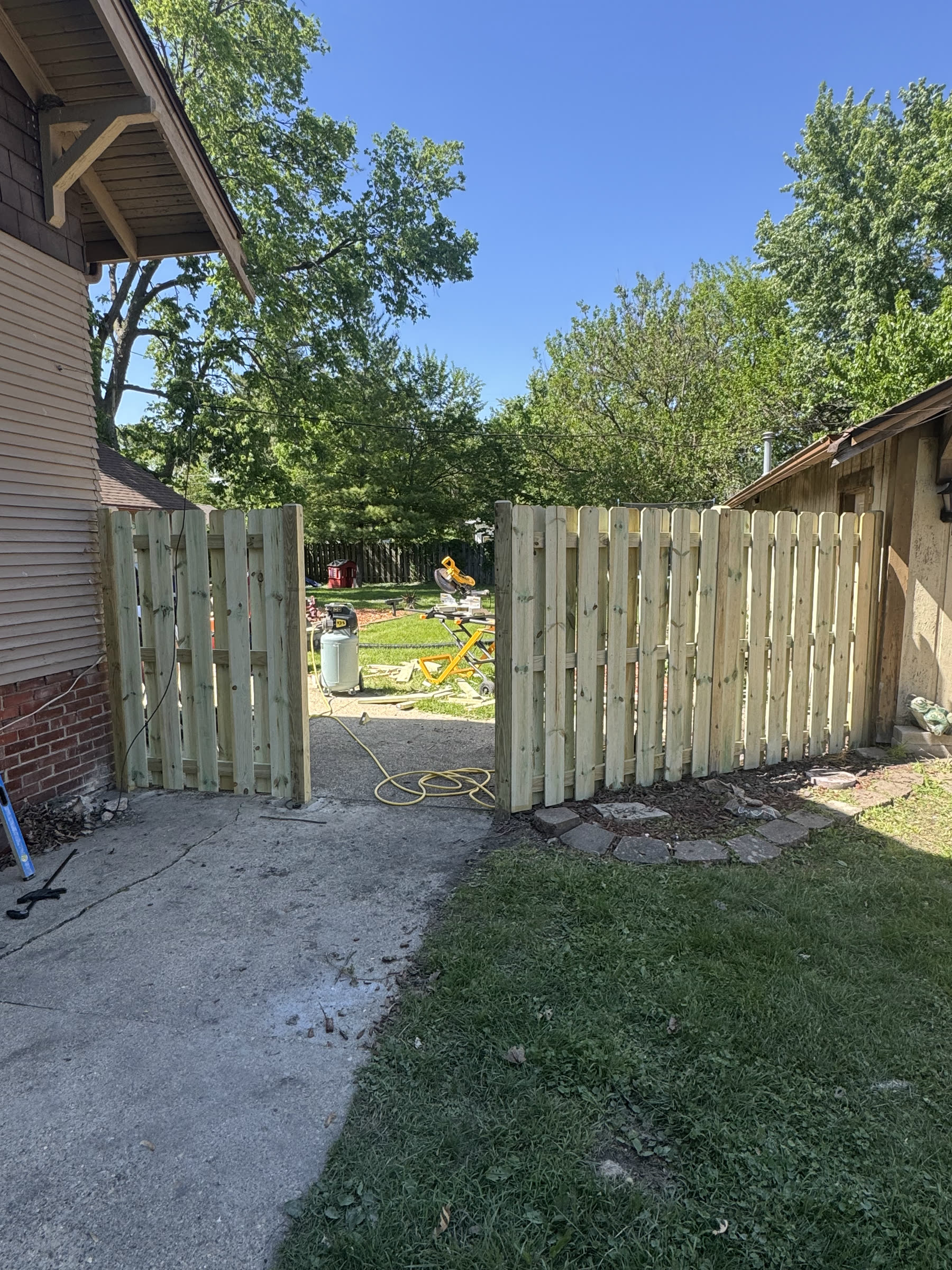
Shadowbox
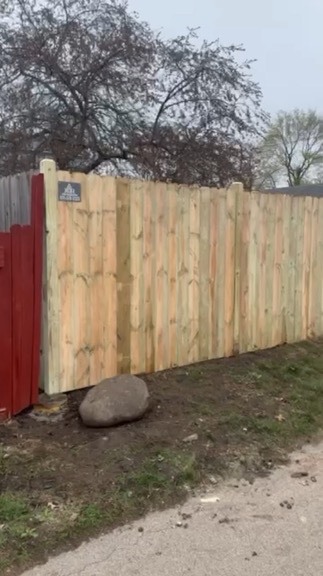
Solid privacy
Shadowbox or solid, and who gets the good side.
A solid privacy fence is boards butted tight, and it screens everything. It also has a front and a back. One face is boards, the other is rails and posts, and somebody has to be on the wrong side of that. Usually it is a conversation with a neighbor, and usually it happens after the fence is up.
Shadowbox settles it by alternating: one board on your side of the rail, the next on theirs, the whole way down. It reads the same from both yards. What it gives up is absolute screening, because standing at an angle you can see between the boards, and wind goes through it rather than pushing on it.
Which way the finished face points is not always yours to choose. Some towns write it into their rules and some say nothing at all. Either way it gets settled at the permit, and pulling the permit is our job.
Talk through a privacy runWhat wood does after the first summer.
None of the four below is a fence going wrong. It is what a board cut from a tree does once it has to live outside in Illinois, and telling weathering apart from failure is most of what makes a wood fence easy to own.
All four are the wood behaving like wood. What follows is the wood telling you something.
How a wood fence actually fails.
Not all at once, and hardly ever where you happen to be looking. Wood goes from the ground up and from the joints out, so the parts that decide the fence are the parts nobody inspects.
That is worth knowing before you buy one rather than after, because it tells you what to ask for. Not the board count and not the color. What goes into the wood, and what the wood is standing in.
How to read a fence quoteWhere it starts, from the ground up
- At gradeThe line where the post meets the soil. Wet ground on one side, air on the other, wood in between. A post can be sound at the height you touch it and gone at the ground, which is how a fence that looks fine goes over in one push.
- The fastener lineThe wrong fastener in wood bleeds. Black streaks run down the face from every head and they do not wash off. That stays cosmetic right up until the fastener itself lets go, and then it is a loose board.
- The rail jointA rail carries every board hung on it. When its connection to the post gives up, the run sags between two posts that are both still perfectly plumb, and the gap opens along the bottom rather than the top.
- The gate that stays droppedSeasonal drag corrects itself. A gate that has dropped and stayed down has lost its square, and by then the latch has been forced for a while to make it catch.
What you can do about it.
This is information rather than an offer. Below is what the wood asks for. Whether you do it yourself, hire it out, or decide you would rather let the fence go silver is yours to settle.
- Decide whether it gets a finish, and decide it early. Unfinished, the fence grays and keeps standing. Finished, it holds its color and you have signed up to renew it. Neither one is wrong. Only one of them is a recurring job.
- Do not finish it the day it goes up. Wood still holding water will not take a stain or a sealer properly. The right moment is set by how dry the boards are, not by how new the fence is.
- The horizontal surfaces are the ones that matter. Post tops and the top edges of boards hold water where a vertical face sheds it. That is where a finish earns its keep, and it is where the gray shows up first.
- Keep the ground away from the wood. Soil banked against the boards, mulch piled at the base, a sprinkler hitting the same stretch every evening: all three keep the bottom of the fence wet, and wet at the bottom is the one condition wood cannot outlast.
Asked before anybody signs off on wood.
Does a wood fence from Xcel come with a warranty?
No. Wood is the only fence material we build that carries no warranty at all. The limited lifetime manufacturer warranty runs on non-wood fence materials and is backed by the manufacturer rather than by us, and our own craftsmanship warranty covers defects in how we installed a fence. Wood sits outside both, so you are buying the boards and the build with no paper behind either one.
Shadowbox or solid privacy: which one do I want?
Solid boards butted tight give you the most screening, and one side of that fence ends up showing the rails and the posts. Shadowbox alternates the boards from one face of the rail to the other, so it reads the same from both yards and lets wind pass through, and standing at an angle it is not a full screen. Some towns have a rule about which way the finished face has to point. That gets settled at the permit, which is ours to pull.
Will the fence go gray?
Left unfinished, yes. Sunlight pulls the color out of the surface and the fence settles toward silver. That is the wood weathering rather than the wood failing, and plenty of people want a wood fence precisely for it. Holding the original color means putting a finish on it and putting it on again, on a schedule the wood sets rather than one the calendar does.
What keeps a wood fence from leaning?
Two separate things, and only one of them is the wood. The posts go in below the frost line, because ground that freezes lifts a shallow post and never sets it back down. After that it is the joint where the rail meets the post that decides it: a rail carries every board hung on it, and when that connection lets go the run sags between two posts that are both still perfectly plumb.
What does a wood fence need from me?
One decision and two habits. The decision is whether it gets a finish: left alone it grays and keeps standing, finished it holds its color and you have signed up to do it again. The habits are keeping soil and mulch off the bottom of the boards, and keeping a sprinkler from soaking the same stretch every evening. Wood dies at the ground first, and both of those keep it wet down there.
Can a single damaged board be replaced?
Yes, and it is the thing wood does better than any other fence material. A split or broken board comes off and a new one goes on in the same opening. On a panel system the smallest unit of repair is usually the whole panel. The catch is color: a fresh board sits brighter than the weathered ones beside it until it catches up.
If wood is not it, here are the other three.
None of this page is an argument against wood. It is the argument for knowing what you picked. If the upkeep is the part you cannot live with, three materials do not ask for any.
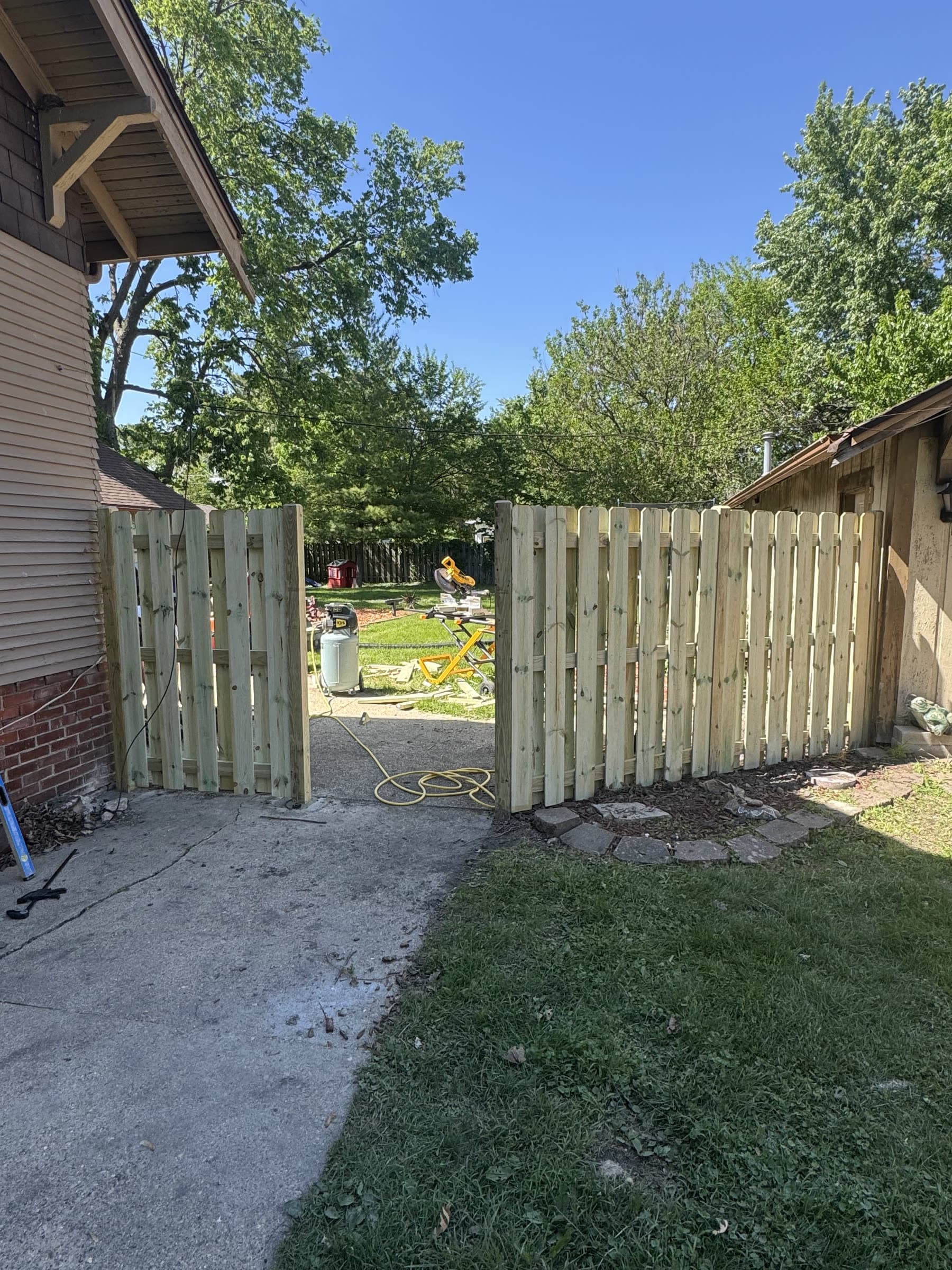
Let’s stand where the wood would go.
The estimate is free and Jake comes out to walk the line with you. Say up front that you are thinking about wood, because it is the one material here with a real trade in it and it changes the conversation. The number comes after, built on what he saw.
Monday to Friday, 7:00 AM to 5:00 PMCall any time.We’re usually booking a few weeks out.
Limited lifetime manufacturer warranty on non-wood fence materialsCraftsmanship warranty on our deck builds and non-wood fence installsFully insured & registered