

Vinyl fence installation across the Illinois Valley.
Xcel Outdoor Living builds vinyl fence out of Spring Valley, Illinois, across Bureau, LaSalle, Putnam, Marshall, and Lee counties. It comes two ways: solid privacy panel, and open ranch rail. This page starts with the three doubts people bring to it, because they are fair ones and each has an answer.
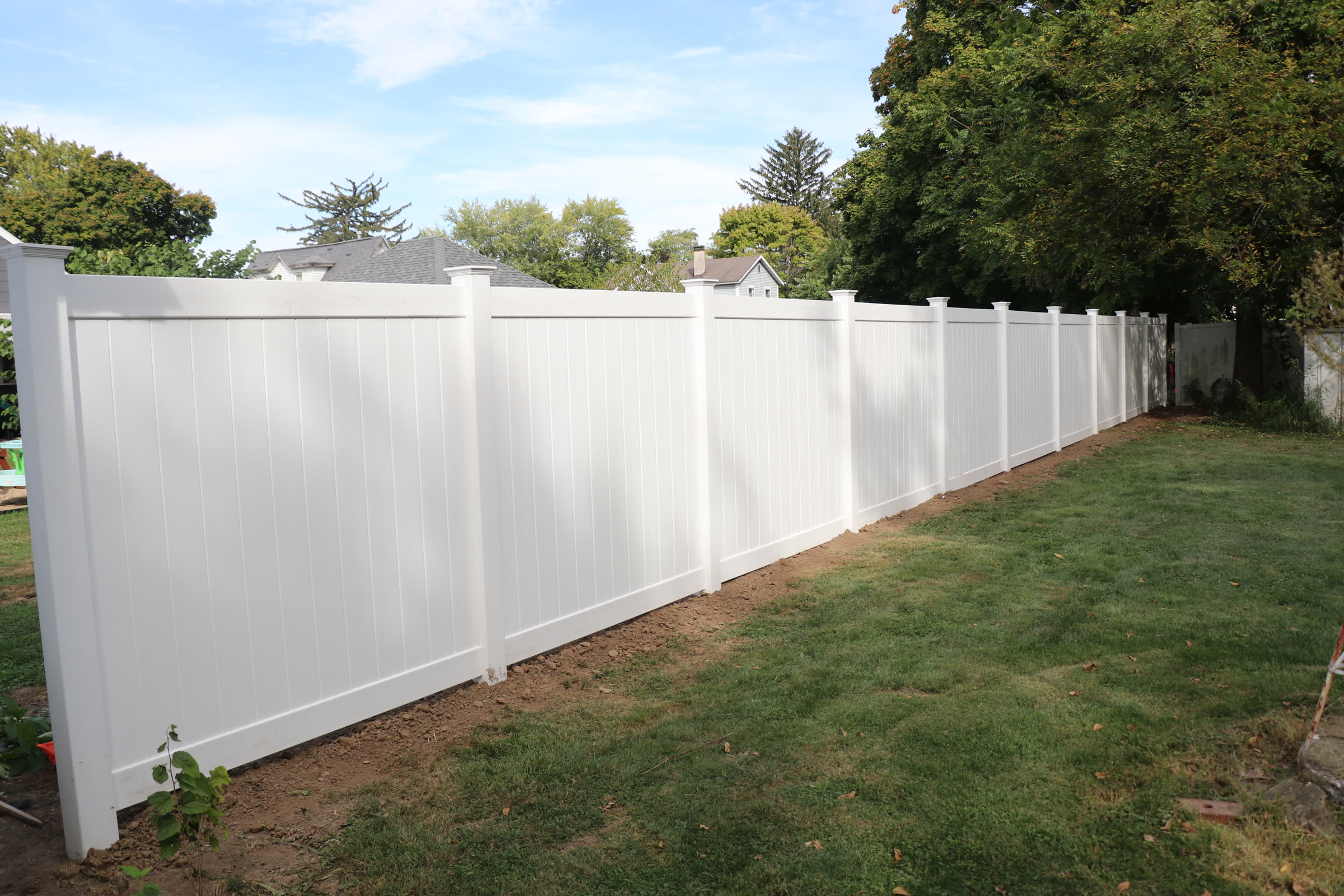
Vinyl privacy run · Illinois Valley
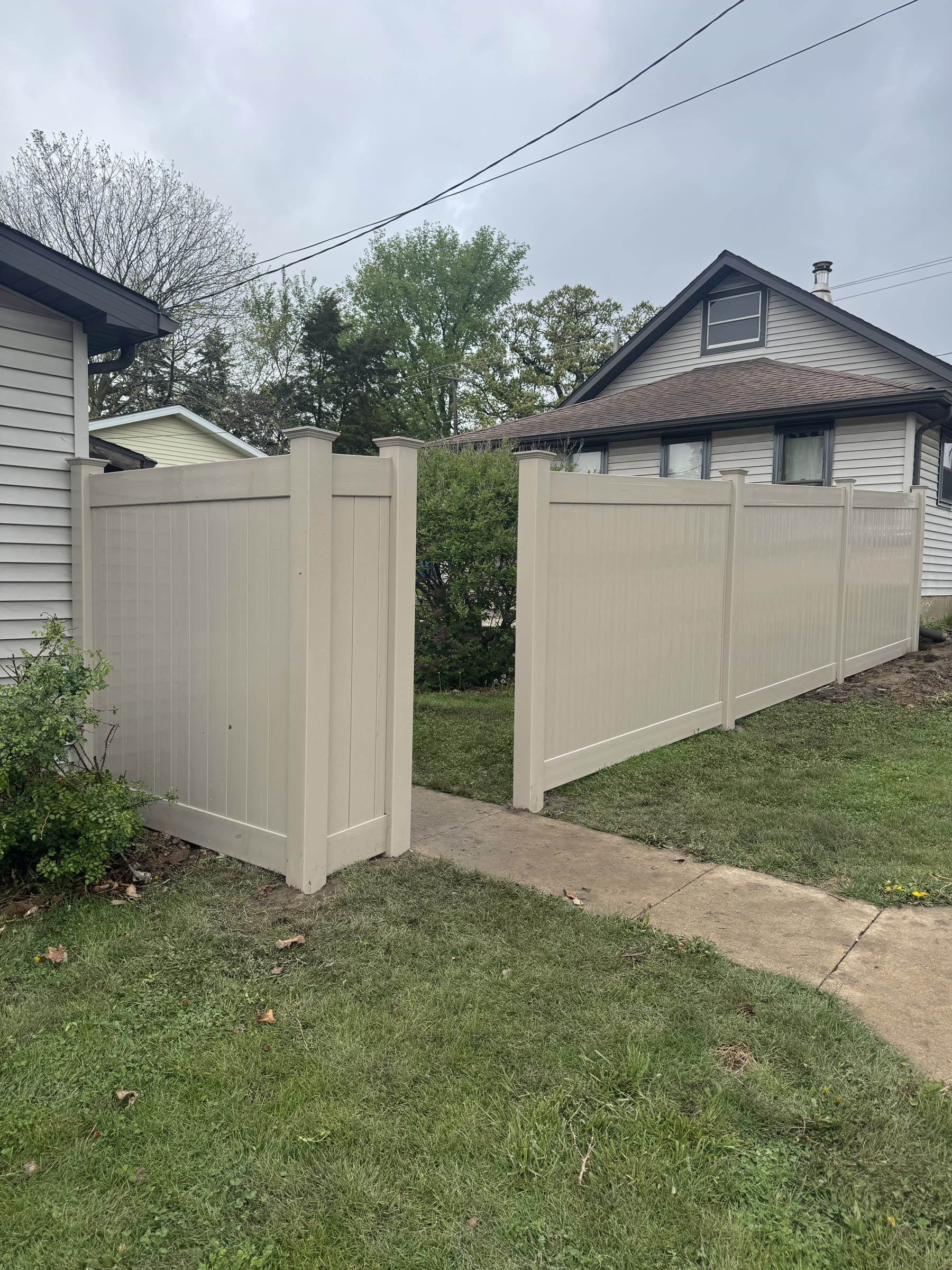
Tan vinyl privacy · not every vinyl fence is white
Most of what goes wrong is a shortcut, not the material
Three worries come up more than all the others put together, and not one of them is silly. You can go and find every one of them on a fence somewhere in this valley. What they have in common is that none is really a property of vinyl. Each is what a decision made at build time looks like a few years on.
- It looks cheap. Some of it does, and you can see why from the sidewalk: a thin panel ripples in flat light, and a loose rail leaves a shadow at every joint. That is a panel picked down to a number, hung on a run nobody pulled a string on. Both of those were settled before the first post went in the ground, which is exactly why the fence in these photographs reads differently.
- It goes brittle and cracks in January. Vinyl does stiffen in the cold, so an impact it would shrug off in July can split it. What it does not do is crack because the air is cold. The winter damage people end up standing in front of is almost always the ground: posts that stopped short of the frost line get lifted by soil that freezes and swells, the run goes out of true, and the panels take the strain of it. That is a hole dug wrong, not a fence that failed.
- It yellows. Most of what gets called yellowing is a film of dust and algae on a shaded run, and it washes off with a hose. Material genuinely going off color after years of sun is a different thing, it is real, and it is decided on the day somebody chooses the panel rather than on any day after it.
Good vinyl and bad vinyl feel different
Vinyl is one word covering a wide range of material, and the difference between the good end and the bad end is not something a photograph will show you. It is how much material is in the wall, how the rail locks into the post, and whether the panel is holding its own shape. All three are things your hands can settle in about half a minute.
It is also the right question to put to whoever is quoting you. A specification tells you what you are buying in a way that nothing else in a quote can.
What a specification should tell youAsk what we would put in your yardThree checks you can make with your hands
Thirty seconds at a neighbor’s fence tells you more than an afternoon of reading.
How a vinyl fence fails, when it fails
It does not rot, it does not cup, and it does not lose a board to a wet spring. That removes most of the ways a fence goes bad, and it leaves the ones that are structural. When a vinyl fence disappoints somebody, it is almost always one of the three beside this paragraph, and none of the three is about the plastic.
None of that is an argument against the material. It is the list worth checking on somebody else’s fence before you decide who is building yours.
Three ways it goes wrong
- The bowA panel that will not sit flat, usually because it was never square in the post or because a rail is carrying more span than it can. You see it first from the end of the run in flat evening light, never head on.
- The rackA post that leans takes the whole bay with it, because the panel is rigid and cannot absorb anything. Wood loses one board out of plumb. Vinyl loses the section. What is under the post decides this one.
- The sailA solid privacy panel gives wind nothing to pass through, so it catches all of it. Along a run that load spreads across every post. At a gate it lands on one of them, which is why gates are where a vinyl fence shows its build first.
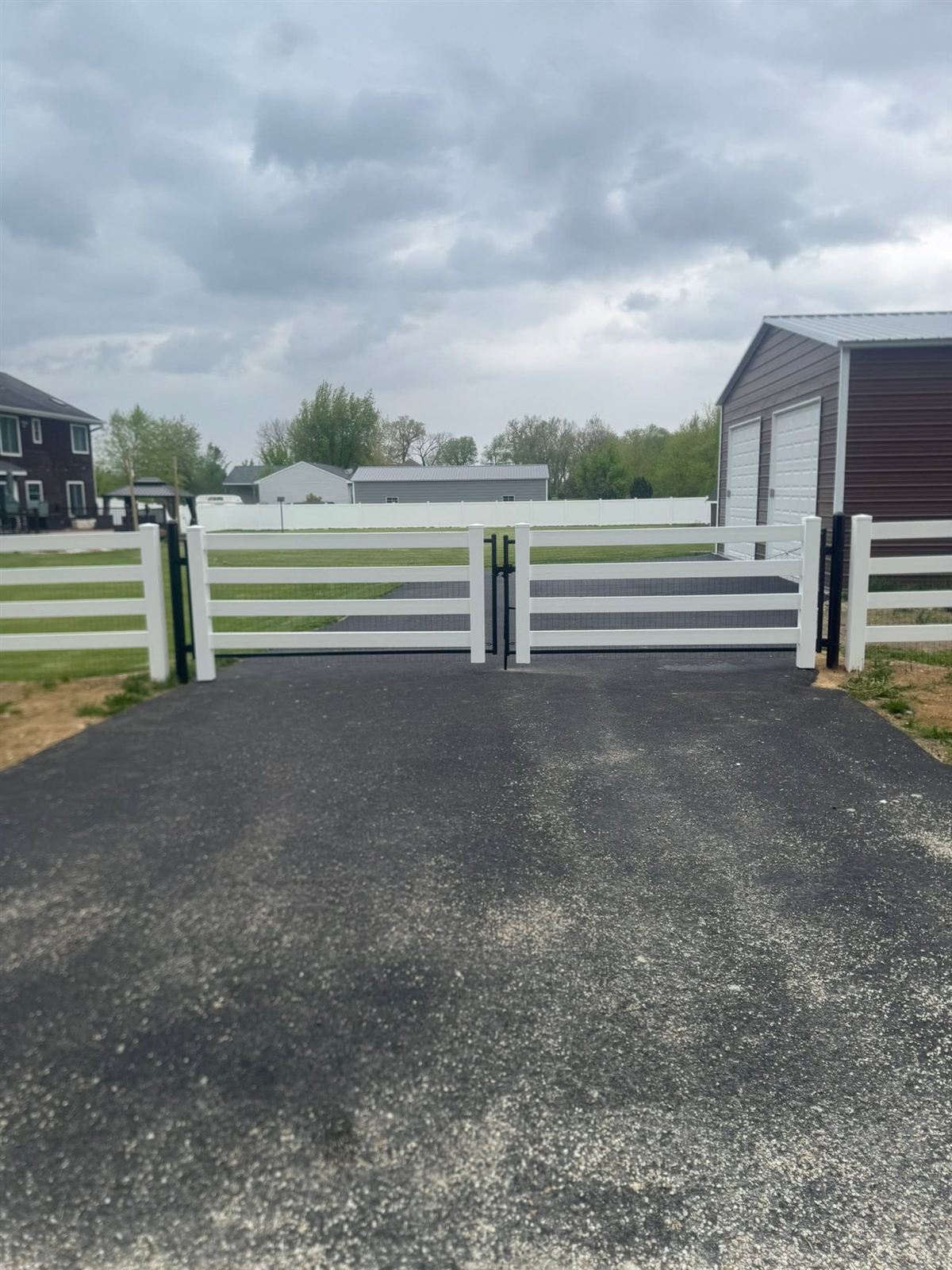
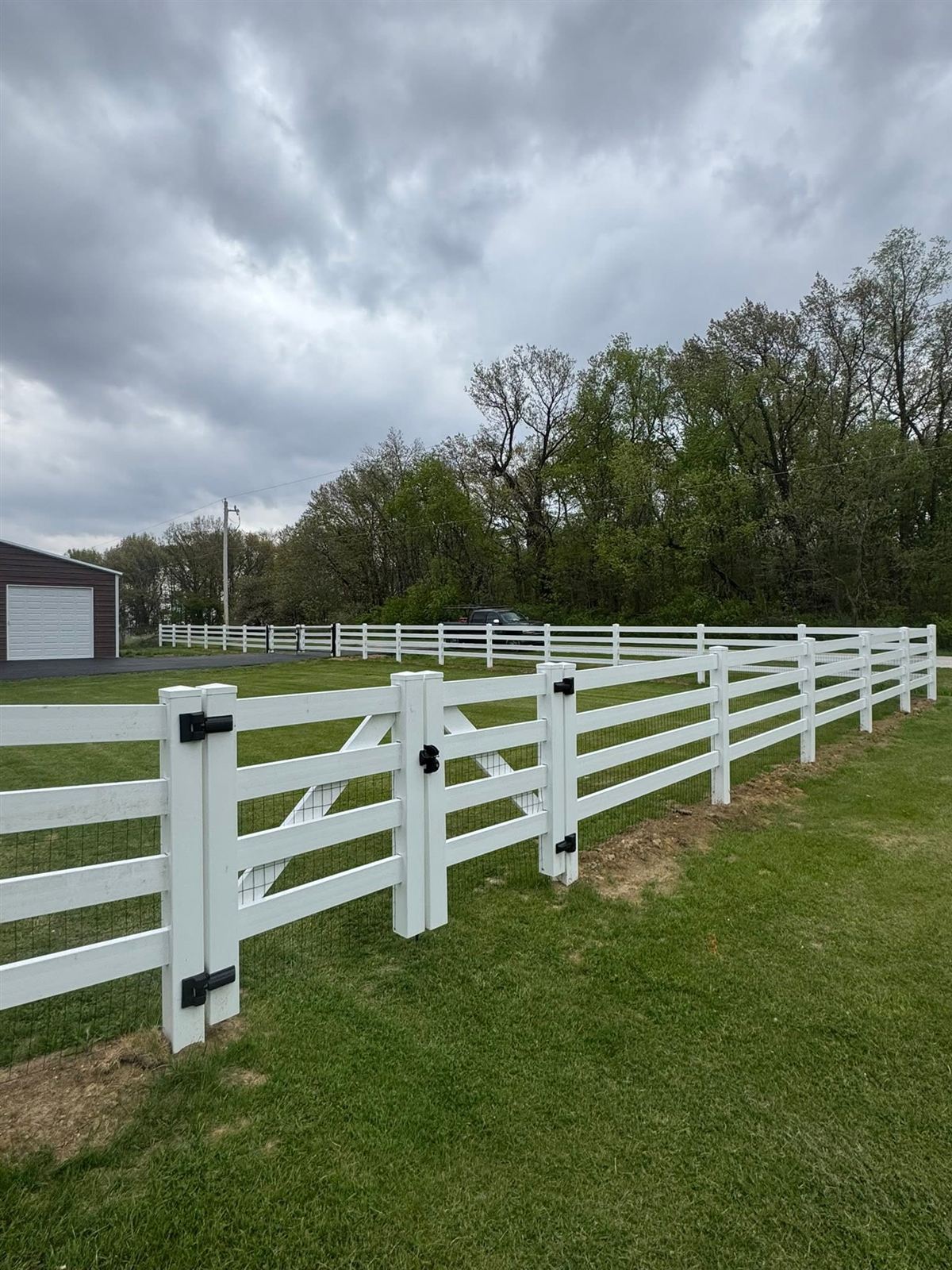
Ranch rail, and the two gates that go in it
Ranch rail is the other half of what vinyl does
Everything above this point is about the solid privacy panel, because that is what most people mean when they say vinyl fence. Ranch rail is the other one: horizontal rails on posts, usually three or four of them, open between the rails, run along a property line or down a drive rather than around a back yard. It is a different fence doing a different job.
Two of the three failures above still apply to it. The sail does not. A rail fence is mostly air, so wind is not what tests it, and the three things that do are its own.
- It holds nothing in by itself. The gap between the rails is the reason to want the style, and it is also the reason a dog is through it inside a week. Welded wire fixed behind the rails is the usual answer, and it is there in both photographs beside this paragraph. That is a decision made before the fence goes up.
- You read the whole run at once. A privacy fence is judged from a back door a few strides away. Ranch rail goes along a frontage, so you take in the length of it in one look, and every rail is a separate horizontal for a post out of true to break. There is nowhere on a fence like this for a bad line to hide.
- The gate is a span, not a sail. A drive gate is wide because the point of it is that a truck or a trailer fits through, and a leaf that wide is working on its hinge post every time it swings. Wind is the privacy gate’s problem. Weight and reach are this one’s.
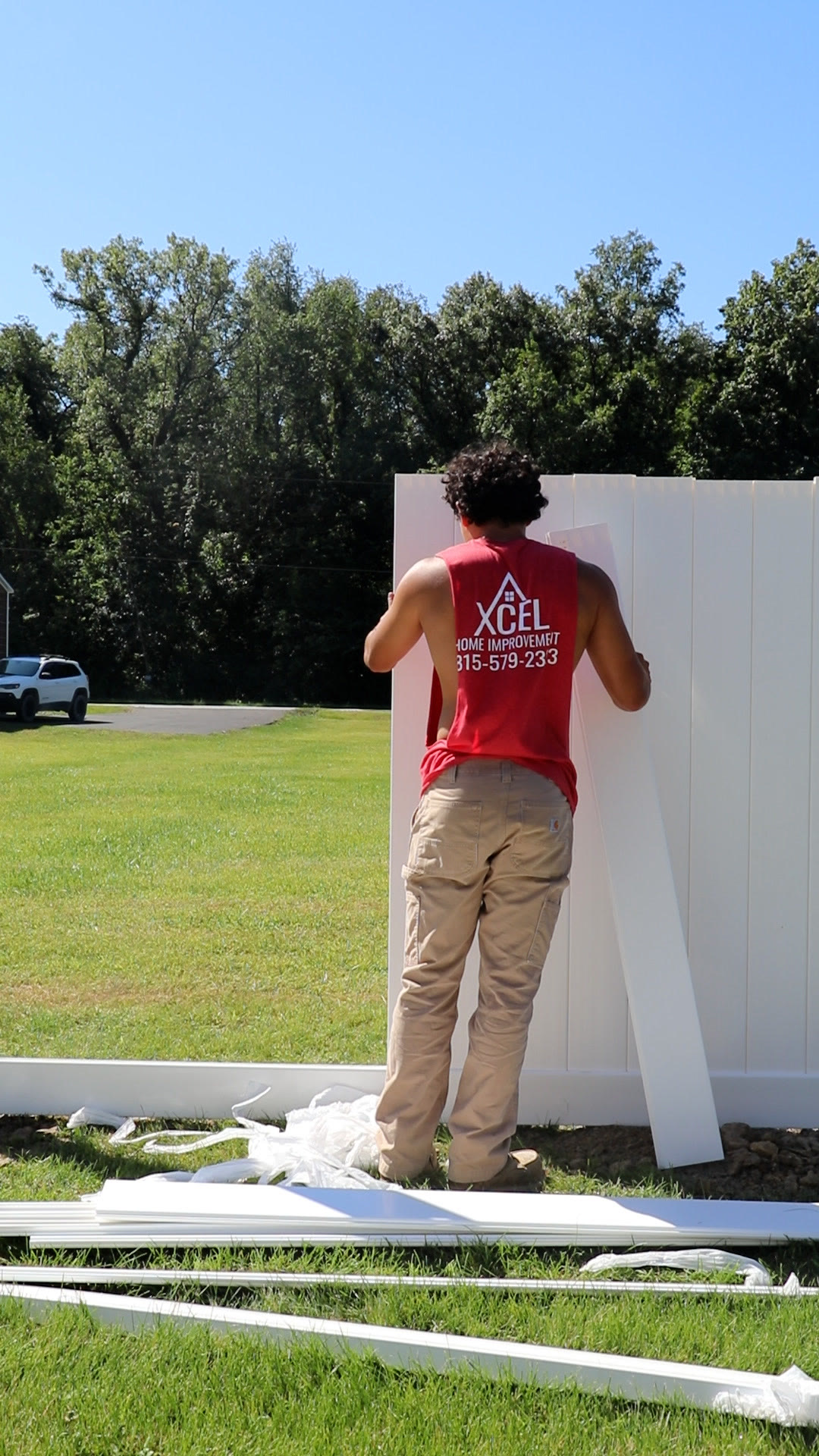
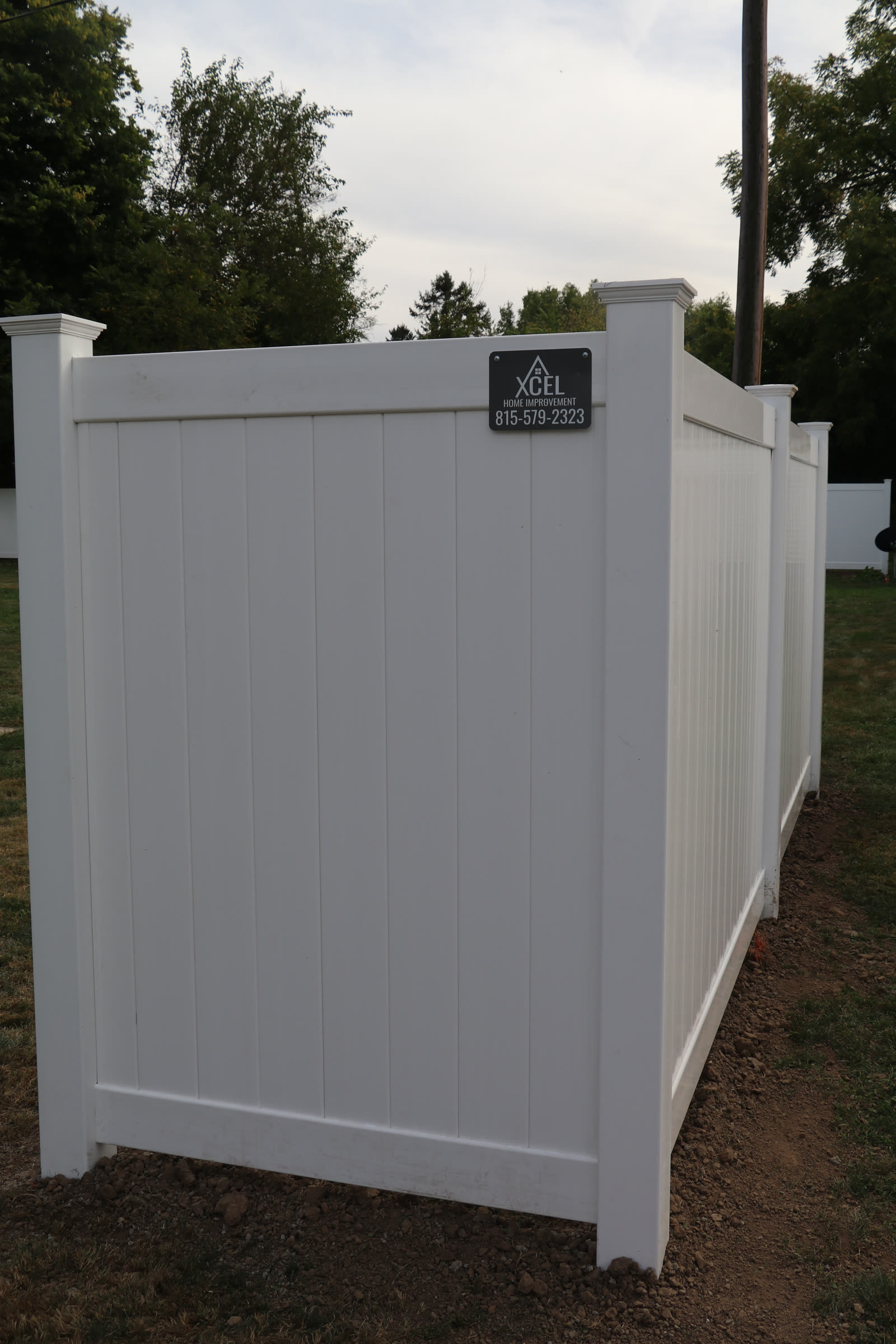
Vinyl work, going in and finished
A vinyl run is set out before the first hole is dug
Panels are fixed lengths that seat into routed posts, so the spacing is settled before anybody starts digging. A wood fence is the other way round: the boards get cut to fit whatever the posts turned out to be. It means a vinyl hole that hits rock cannot simply be shifted along the line, and it is why the ground gets read before the number rather than after it.
- Where the run meets something. A tree, a corner, a utility, the edge of a patio. On a panel system that gets solved on the layout while everybody is still standing in the yard, because once the spacing is set a hole cannot be nudged along the line to suit what is in the way.
- The post arrives already routed. The rail is captured inside the post rather than screwed to the face of it, so there is no fastener at that joint to work loose over ten years. It is also why a rail that was never seated properly shows up as a shadow rather than as something you can hear.
- Posts go in below the frost line. Frost lifts whatever is set shallow, and on a panel system it never lifts only the post: the rails are held inside it, so the bay comes up with it.
- The estimate is free and it happens at your place. Jake Palmieri owns Xcel, he is the one who walks the line with you, and he is on the job while it is being built. The crew is three or four people. The number comes after the visit, not on the doorstep.
- Rock is in the number before you get it. Parts of the Illinois Valley are rocky, and on a fixed-length run a hole that hits rock costs more than it would on a wood one, because moving that post moves every post after it. He reads the ground while he is standing on it rather than after you have agreed to something.
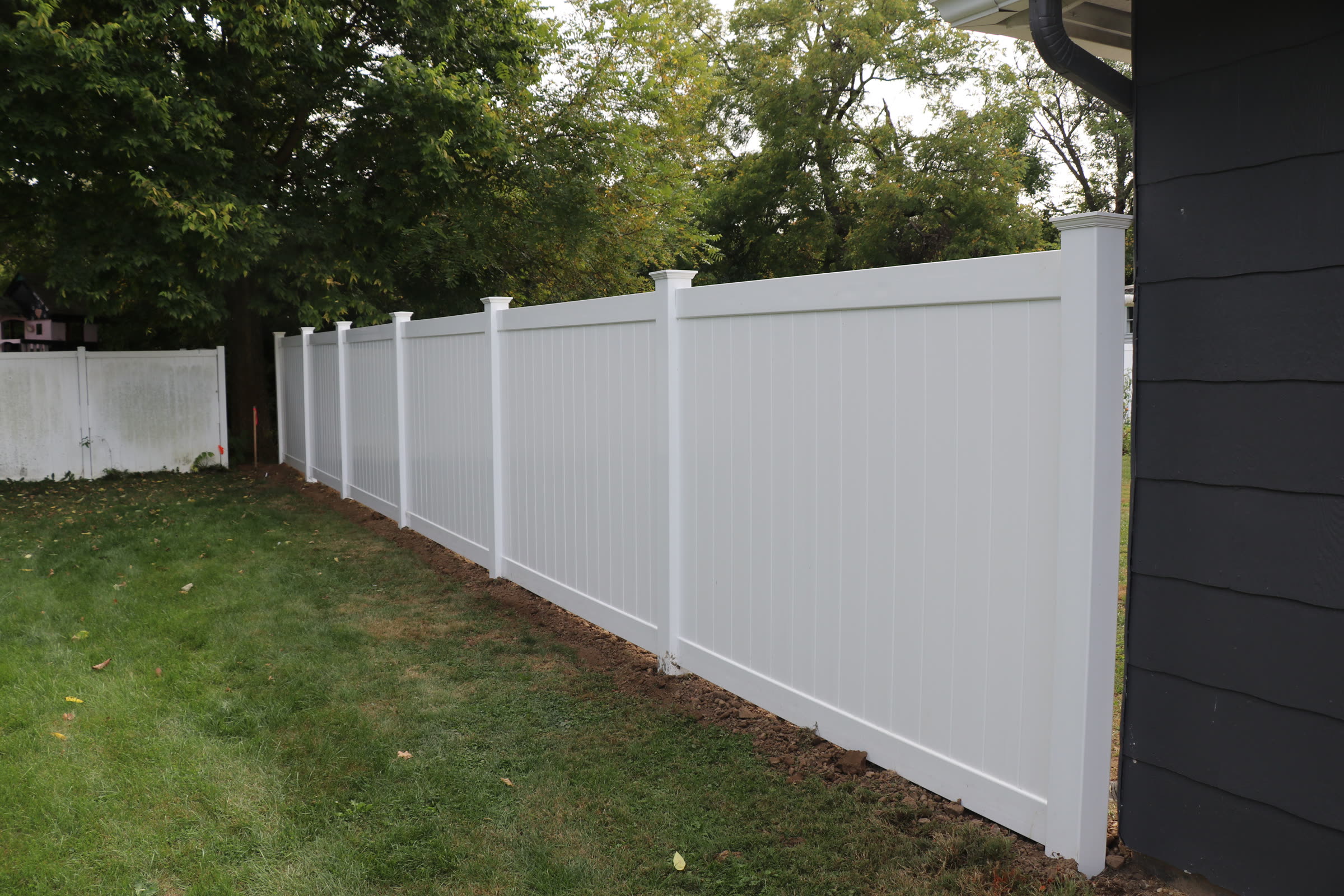
White vinyl against charcoal siding
Ten years of a vinyl fence
This is where vinyl genuinely wins. A wood fence has a maintenance schedule. A vinyl fence has a hose. Over ten years that is the difference between a standing job and a couple of mornings you will barely remember.
- What it wants. A rinse, and a soft brush on the shaded side where a green film settles. Twice a year is a generous account of it.
- What it never wants. Stain, sealer, sanding, or a weekend. Nothing to strip back, nothing to re-nail, no color to keep matching.
- The color trade. Vinyl does not take stain or paint, so the color you pick is the color you have. Pick it for the house you own now rather than the one you are thinking about.
- The repair trade. A panel damaged badly enough is replaced rather than repaired, and getting it out means working from the posts on either side of it. Worth knowing before you choose, not after.
Vinyl is on the covered side of both warranties.
There is a limited lifetime manufacturer warranty on non-wood fence materials, backed by the manufacturer rather than by us. Our own craftsmanship warranty covers defects in how we installed it, and not settling, weather, impact or ordinary wear. Two halves, and two different people standing behind them.
Which half a problem falls under is worth knowing before you buy rather than on the morning you need it. On this material you are inside both, and that is not true of everything we build.
Wood is the one material excluded from both.
Get a free estimateIf vinyl is not it, here are the other three.
Three others, each with its own reason to pick it and its own reason not to.
The questions people actually arrive with.
Does a vinyl fence look cheap?
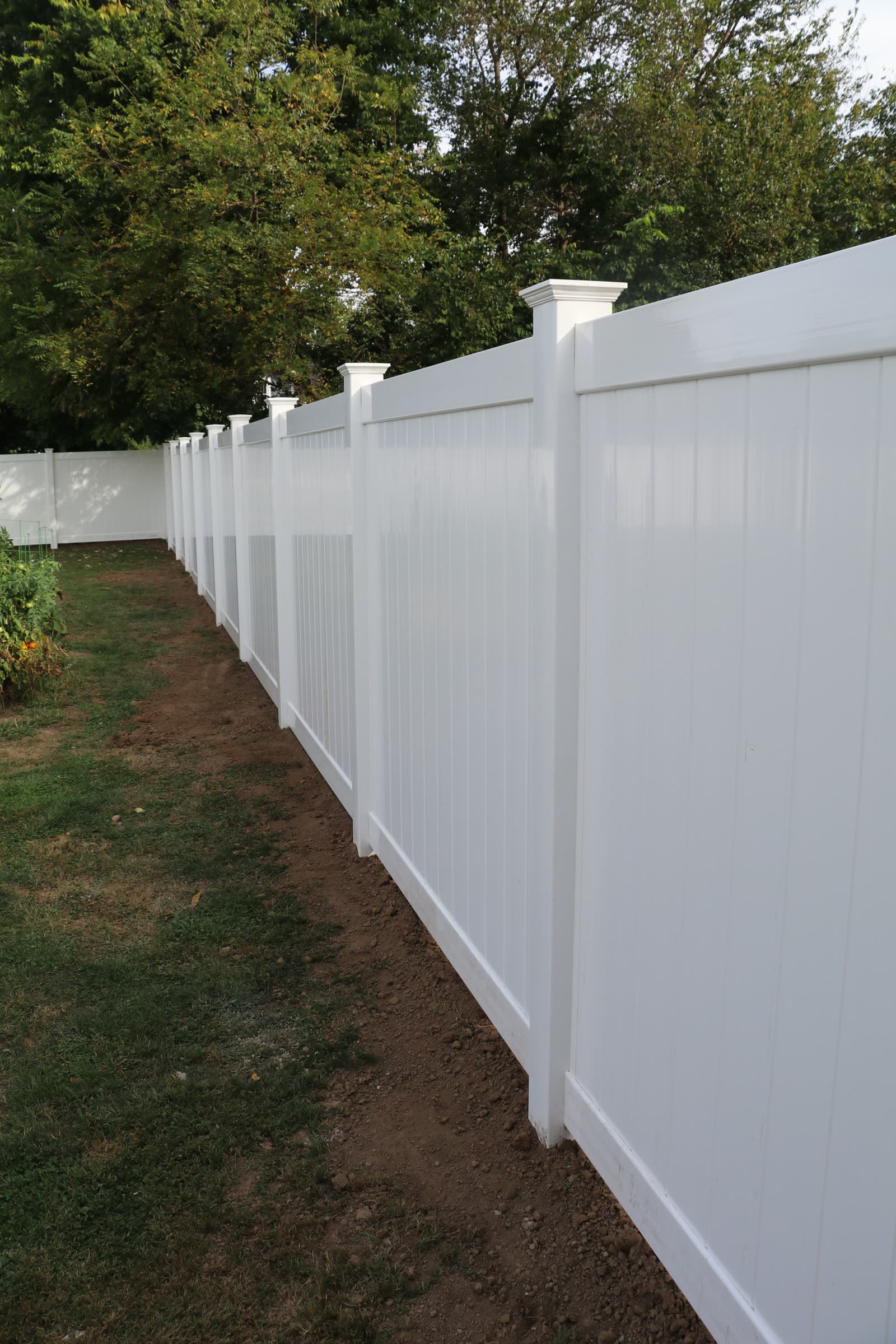
It can, and the reasons are visible from the sidewalk. A thin panel ripples in flat evening light. A rail sitting loose in its post leaves a shadow at every joint. A run that wanders reads wrong even when you cannot say why. What a good one looks like is a straight top line, joints that close up tight, and caps that match: look for those three in the photographs on this page, and on any fence you drive past.
Does vinyl crack in an Illinois winter?
Cold on its own does not crack a fence. What changes in January is that vinyl gets stiffer, so an impact it would shrug off in July can split it: a stone off the mower deck, a sled, a truck mirror. The winter problem worth more of your attention is not the panel at all, it is the post. Ground that freezes swells and pushes anything shallow upward, and a vinyl run shows it sooner than a wood one, because every panel is the same height and your eye reads the top line like a spirit level. Ours go in below the frost line.
Will white vinyl turn yellow?
Two different things get called yellowing. The common one is a film of dust, pollen and algae, worst on a shaded run that never gets full sun, and it comes off with a hose and a soft brush. The other is the material itself going off color after years of sun, and that is decided by what the panel is made of rather than by how it was installed. There is a way to settle that one without taking anybody's word for it. Find a run of the same material that has been up for years and look at the shaded face against the face that takes the sun. If the two still match, the material held. Ask whoever is quoting you what the panel is made of, and ask where you can go and stand in front of an old one.
Is white the only color vinyl comes in?
No. There is a tan run in the photographs on this page. Stock privacy vinyl comes in clay, coastal cedar, cypress, tan and white. BlackLine and Brazilian Blend are a special order. A color on a screen is not the color you end up living with, so look at one outdoors before you settle on it. Tell Jake which way you are leaning while he walks the line with you.
Will a ranch rail fence keep a dog in?
Not on its own. A ranch rail fence is a few horizontal rails with open space between them, and that space is the whole reason to choose the style: you can see through it and so can the light. Anything smaller than the gap walks through it. The usual answer is welded wire fixed behind the rails, and you can see it on both of the runs photographed on this page. Say early on that a dog is the reason you want the fence, because it changes what gets built rather than what gets added afterward.
Will a vinyl gate sag?
A privacy gate is a solid leaf with nothing for wind to pass through, so it catches all of it, and that load lands on one hinge post. Two things answer it. The leaf is framed and braced corner to corner so it carries its own weight instead of hanging off the latch, and the post that swings it is set to take the pull. A gate that drops in its second summer was almost always hung on a post that was never going to hold it.
Is a vinyl fence covered by a warranty?
By both of ours, and vinyl is on the covered side of the only line that matters. There is a limited lifetime manufacturer warranty on non-wood fence materials, backed by the manufacturer rather than by us. Our own craftsmanship warranty is narrower and it is ours: it covers defects in how we installed it, and not settling, weather, impact or ordinary wear. Wood is the one material excluded from both, which is worth knowing while you are still choosing.
Let’s stand where the fence would go.
The estimate is free. Jake comes out, walks the line with you, and reads the ground while he is there. The number comes after, and the rock is already in it.
Monday to Friday, 7:00 AM to 5:00 PMCall any time.We’re usually booking a few weeks out.
Limited lifetime manufacturer warranty on non-wood fence materialsCraftsmanship warranty on our deck builds and non-wood fence installsFully insured & registered