
Fencing · Materials
Which fence materials hold up through Illinois Valley winters
Xcel Outdoor Living builds vinyl, aluminum, chain-link and wood fences across the Illinois Valley out of Spring Valley, Illinois, serving Bureau, LaSalle, Putnam, Marshall, and Lee counties, where every one of them has to get through winters that freeze the ground.
On our jobs, vinyl, aluminum and chain-link have held up well through those winters, and wood does well once its weak point, the post at ground level, is taken care of. With any of the four, how the fence goes in matters as much as what it is made of.
About 5 minutes to read
What a winter here does to any fence
The first thing a winter here works on is the ground under the fence, which freezes and swells and pushes any post that stops inside the frozen layer up a little each year without letting it settle all the way back. That happens the same way under every material, and only the way it shows changes: a wood run leans, a vinyl panel pulls out of its post, and an aluminum run steps out of line where it used to follow the ground.
That is why the first thing we decide on any fence is the hole: every post set in concrete at least 42 inches deep, below the frost line, so winter has nothing to grab. The full story is in our post depth guide.
Vinyl: no rot, no paint, and a little care in the cold
Vinyl does not rot, cup or need paint, which takes away most of the ways a fence wears out in a wet Illinois spring, and it is the fence people ask us for most in Ottawa, Peru, LaSalle and Spring Valley.
The cold changes vinyl in one way worth knowing, which is that it gets stiffer, so in January a panel can split from a knock it would have shrugged off in July: a stone off the mower deck, or a sled. That stiffness matters on install day as well, since vinyl is less forgiving in the cold, so we put it in when conditions are right rather than forcing it.
Gates are where a vinyl fence shows its build first, because a solid panel catches the wind and a gate hangs that load on one post, which is why we brace our vinyl gates for it. Vinyl carries a limited lifetime manufacturer warranty on non-wood fence materials and our craftsmanship warranty on the install for as long as you own the home, and there is more on the vinyl fence page.
Aluminum: no rust and a finish that holds its color
The color on an aluminum fence is powder baked onto the metal, so there is no paint to peel, and with no iron in it there is nothing to rust. A rinse with the hose once the salt is off the roads keeps a run beside the driveway looking clean, and while years of sun take a little gloss off the finish, evenly along the run, the color holds.
On a yard that rolls, aluminum panels can rack to follow the ground in one smooth line, and because you can see every post of an open fence from across the yard, setting them deep matters as much here as anywhere. Aluminum carries both warranties as well, and the aluminum fence page has the rest.
Chain-link: steel that shrugs off the weather
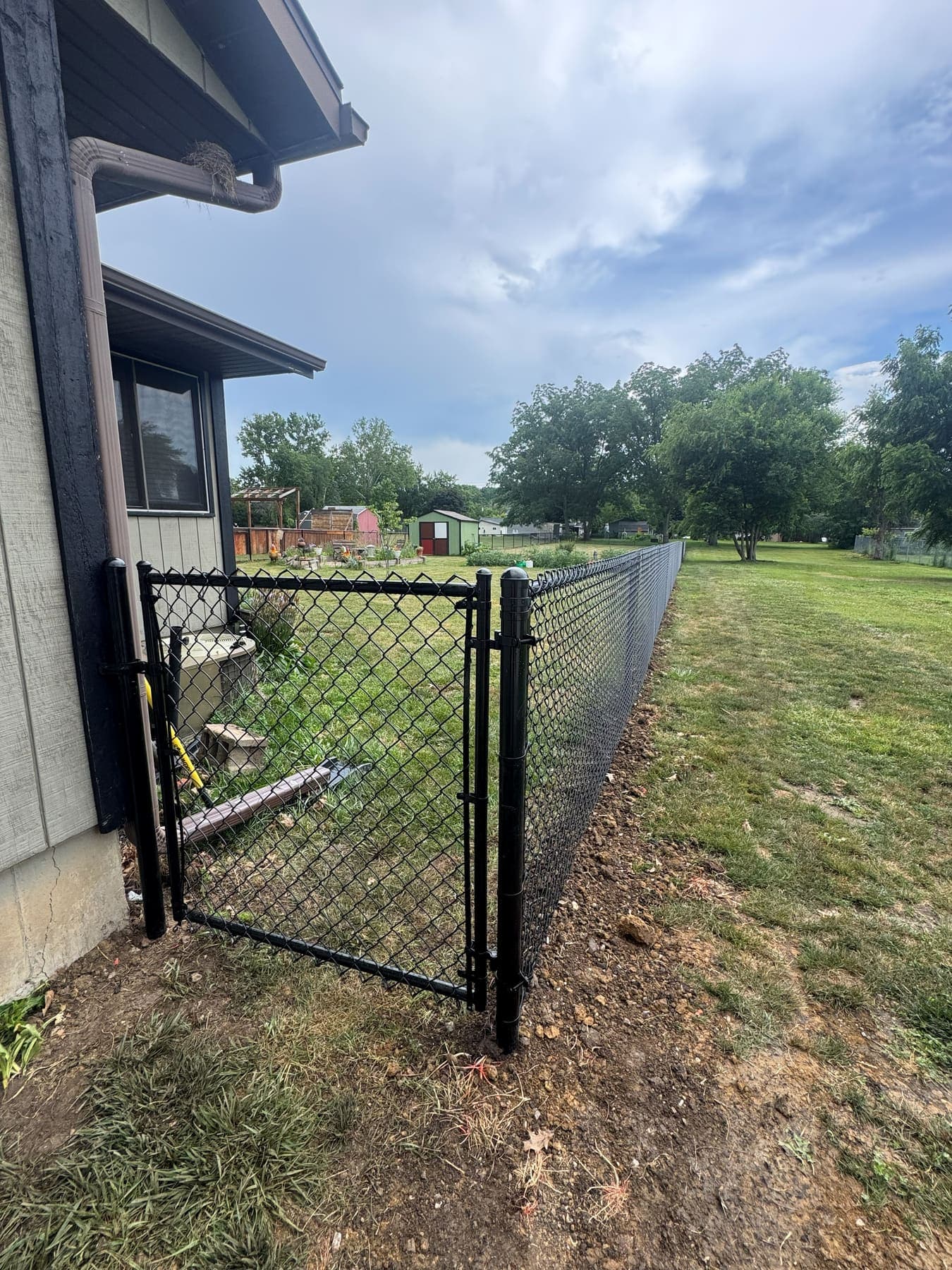
Galvanized and black vinyl-coated chain-link are both steel and both last, and a chain-link fence does not fall over in a hard winter. When one goes wrong it goes soft and low over a couple of seasons: sagging fabric, a wandering top rail or a gate that needs a lift to latch, each traced back to a decision made the day it went in.
Set the posts below the frost line, stretch the fabric tight and brace the gate post for the load it carries, and chain-link handles the weather here year after year. It carries both warranties too, with more on the chain-link fence page.
Wood: the best looking fence, with one weak point to handle
Wood is the best looking fence we build on the day it goes in, and it performs well here; however, its weak point is moisture at the post, right where it meets the ground. Most of the old wood fences we tear out are around twenty years old, and the post rotting at grade is the most common reason they came out.
Handle that and wood does well, which is why we set wood posts in concrete at least 42 inches deep and offer PostMaster steel posts, hidden behind the boards so the fence keeps its traditional wood look with no wood post in the ground. A finish kept up holds the color, and the whole picture is in our guide to how long a wood fence lasts.
What matters as much as the material
Whatever you choose, the way it goes in decides how it handles the weather, and these are the parts we pay the most attention to:
- Post depth. At least 42 inches, below the frost line, on every fence post.
- Concrete footings. Every post set in concrete, so it stays where it was put.
- Reinforcement where the load lands. Gates and gate posts carry the most strain on any fence, so that is where the bracing goes.
- Hardware. A gate is the one part of a fence that moves, so its hinges and latch earn as much attention as its posts.
- Local conditions. Rock, slopes and corner lots get read at the walkthrough and built into the plan, so the number you were given is the number you pay.
Those are also the specifications worth seeing on any quote, from us or anyone else, and our guide to reading a fence quote explains why they tell you more than a list of line items.
Related questions
What is the best fence material for an Illinois winter?
On our jobs in the Illinois Valley, vinyl, aluminum and chain-link have all held up well through the winters, and wood does well when its posts are protected from rot at ground level. The bigger difference is the install, because posts set at least 42 inches deep in concrete, below the frost line, keep any of the four straight when the ground freezes.
Does a vinyl fence crack in the cold?
The cold on its own does not crack it; however, vinyl gets stiffer in January, so a hard knock it would shrug off in July can split it then: a stone thrown by a mower, or a sled. Vinyl is also less forgiving to install in the cold, so we put it in when conditions are right.
Will road salt rust an aluminum fence?
No, because there is no iron in aluminum to rust. A rinse with the hose once the salt is off the roads keeps a run beside the driveway looking its best.
Does a chain-link fence hold up in winter?
Yes. Galvanized and black vinyl-coated chain-link are both steel and both last, and when a chain-link fence does go wrong it traces back to the day it went in: usually a post set too shallow, or fabric that was never stretched tight. We set ours in concrete below the frost line and stretch the fabric tight.
Can you install a fence in winter?
Our fence season usually runs until about mid-November, when our crew moves on to holiday lighting, and we pick installs back up once the ground and the weather allow rather than on a set date. We also do not force a vinyl install in the cold.
Xcel Outdoor Living builds fences and decks across Bureau, LaSalle, Putnam, Marshall, and Lee counties, Illinois. Call 815-579-2323 to walk your fence line.