

Commercial fence installation for Illinois Valley businesses.
For a business, a fence is serving a specific goal that you can name. Keeping equipment secured or hiding what the parking lot should not be able to see. Xcel Outdoor Living builds out of Spring Valley, Illinois and fences commercial property across Bureau, LaSalle, Putnam, Marshall and Lee counties. We pull the municipal permit and file the JULIE locate, and the fee is inside the number you were quoted.
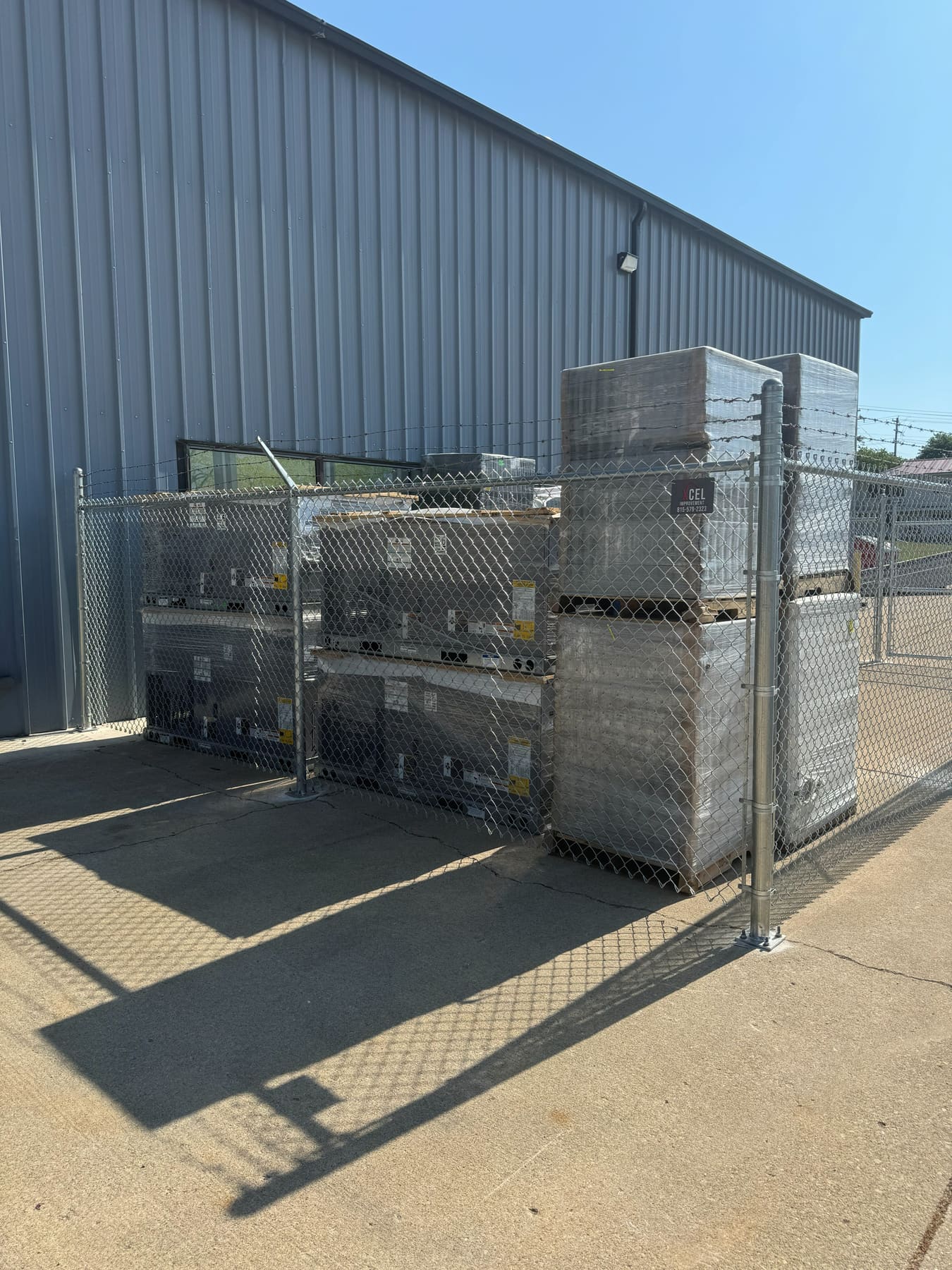
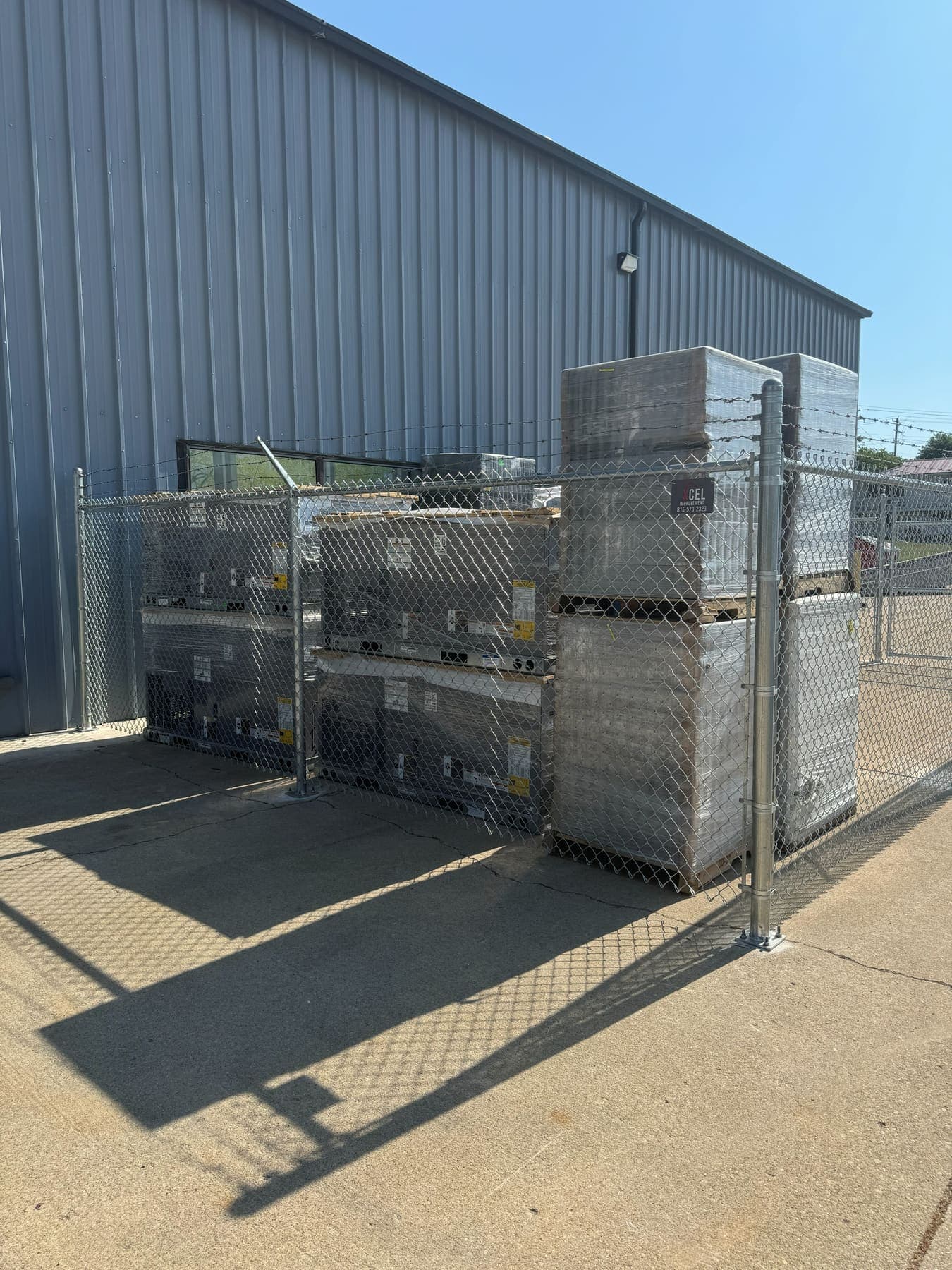
Chain-link security enclosure · Illinois Valley
Yards, and the front of the building.
Two kinds of site, and they want opposite things from a fence.
A storage yard or an industrial lot wants a perimeter you can see through. What is inside stays inside, and anybody at the gate can read the whole lot without walking it. Chain-link covers that kind of ground better than anything else we build, and it holds a long run straight so long as the corners are right.
Shops and restaurants are the other kind, and there the fence is part of what a customer sees on the way in. Screening a dumpster corral so the parking lot does not have to look at it. Closing off the service side of a building. It has to look deliberate from the lot on the first day and still look that way in five years.
Either way the estimate is free. Jake is the one who comes out, and he walks the lot with you before he prices anything.
Have him walk your lot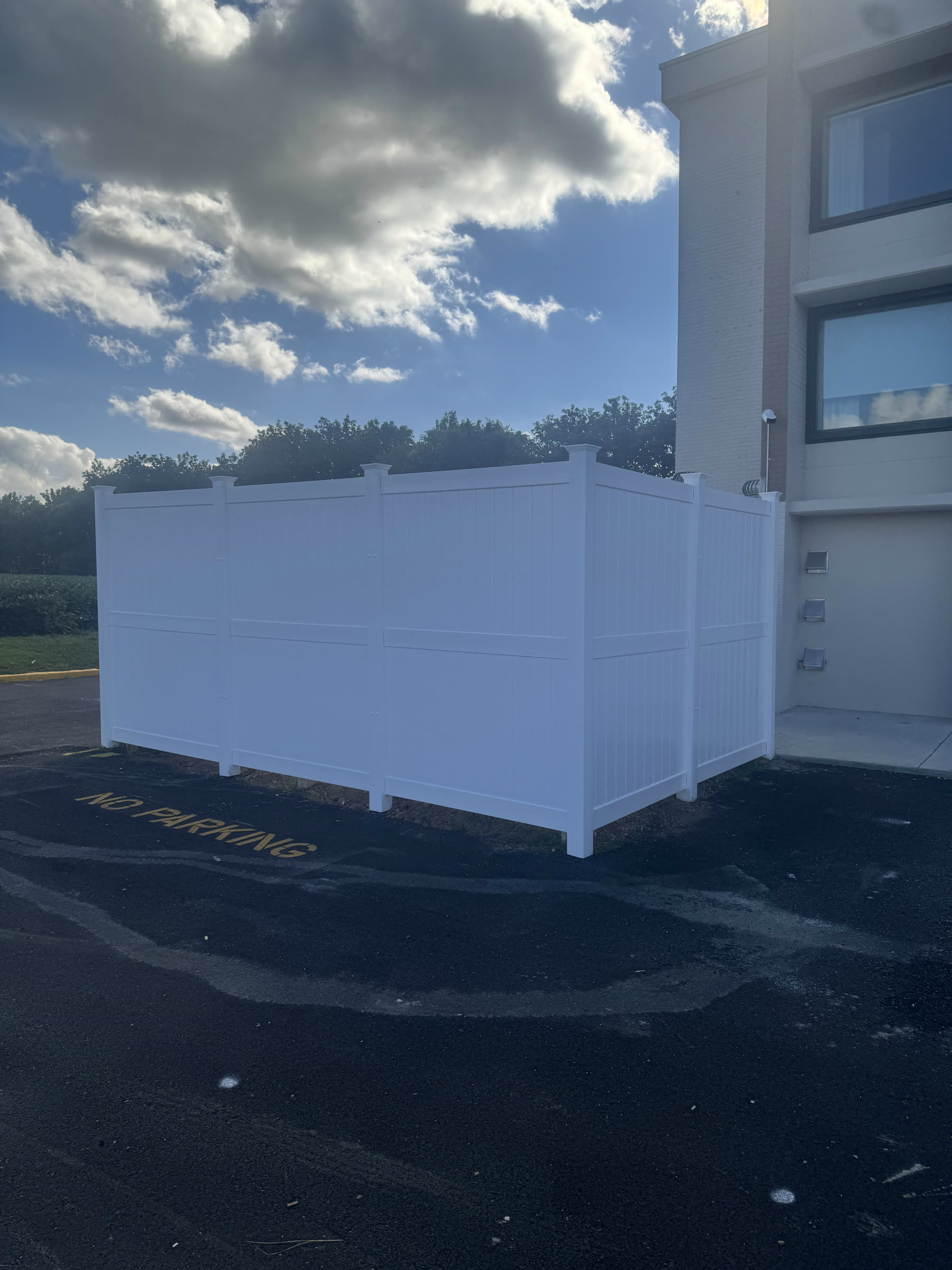
Vinyl screen enclosure · Illinois Valley
Four materials, and what each one is for out here.
On a commercial site one question usually settles it: does the fence have to be seen through, or seen past.
- VinylScreening. Solid panels with nothing to see through, which is what a dumpster corral or the service side of a lot is usually asking for. It comes back to clean with a hose.Vinyl fencing
- AluminumThe line at the front of the building. Powder-coated picket marks the boundary and leaves the view across it alone, and it racks, so ground that falls away does not turn the run into a staircase.Aluminum fencing
- Chain-linkThe long perimeter. Galvanized or black vinyl-coated, stretched tight rather than hung, and the corner and end posts carry the tension of everything between them.Chain-link fencing
- WoodCut and fitted on site board by board, so it takes the shape the site needs instead of the shape a panel arrived in. Neither warranty covers a wood fence though, ours or the manufacturer’s, and that is worth knowing before you pick it.Wood fencing
A material we do not stock, we can special order. Raise it on the walkthrough rather than assuming the answer is no.
All four, side by sideWe pull the permit. We file the JULIE locate.
On a commercial job this is the part that eats somebody’s week. It is not your errand. We file with your village or county, the fee sits inside the number you were quoted, and the utilities get marked before the first hole goes in.
Two things still come back to you, and both are better known now than later. Some towns want the property owner’s signature on the application. And proving where your line actually runs is yours. A permit is permission to build. It is not a determination of a boundary, and on a lot that shares a line with the business next door that difference is worth settling before anybody digs.
Whose job it is to find the lineOnce JULIE has been out, the paint and the flags on the ground decide where a post can go. We work around them rather than through them, which is the whole reason the locate happens before the layout is final instead of after.
We are fully insured and registered.
The number you were given is the number you pay.
Parts of the Illinois Valley are rocky. A crew that does not know the ground finds that out mid-dig and comes back to you with a cost after the number was already agreed.
Jake reads the ground while he walks it with you, so the rock is in the quote before you ever see it. So is the permit fee.
The rest of it is ours.
Get an instant estimateWhat a business owner asks first.
What kind of commercial fencing do you install?
Two kinds of site, mostly. Industrial and storage yards, where the fence is holding a perimeter and everything inside it. And shops and restaurants, where the fence is part of what a customer sees walking in. Four materials cover both, so the choice usually comes down to whether the fence has to be seen through or seen past. Jake will tell you which one your site is when he walks it.
Who pulls the permit on a commercial job?
We do. We file with your village or county, and the fee sits inside the number you were quoted rather than turning up later as an extra. The JULIE locate is ours to file as well, so the utilities are marked before the first hole goes in and we set the post line around them. Two things still come back to you. Some towns want the property owner’s signature on the application. And proving where your property line runs is yours: a permit is permission to build, not a determination of a boundary.
How soon could you start?
We are usually booking a few weeks out. Everything after that depends on your site: the length of the run, the material, and what is under the ground. Jake gives you that read while he is standing on the lot with you. The quote follows the visit rather than arriving during it, so nobody is guessing at a number in a parking lot.
What happens if you hit rock?
Nothing you have to sign for. Parts of the Illinois Valley are rocky, and a crew that does not know the ground finds that out mid-dig and comes back to you with a cost after the number was already agreed. Jake reads the ground while he walks the line with you, so rock is priced in before he gives you a number. The number you were given is the number you pay.
Does a commercial fence go in any differently?
Not in the ground. Posts go in below the frost line, and ground that freezes lifts a shallow post and never sets it back down. On a long straight run that shows up sooner than anywhere else, because you read every post against the two beside it. Traffic is the part worth raising early: say what has to drive through the fence and how big it is, because that decides the gates before anything else is laid out.
What does the warranty cover?
Two separate things, worth keeping apart. There is a limited lifetime manufacturer warranty on non-wood fence materials, and the manufacturer stands behind that half rather than we do. Our own craftsmanship warranty is narrower: it covers defects in how we installed it, for as long as you own the property, and not settling, weather, impact or ordinary wear. A wood fence sits outside both of them, which is the one thing to know before choosing wood for a commercial site.
Your fence, priced in a minute.
Draw your fence line on a map of your yard, pick a material, and a range comes back in about a minute, built on the prices Jake quotes from. He still walks the yard before anything is final.
Monday to Friday, 7:00 AM to 9:00 PM; Saturday and Sunday, 8:00 AM to 8:00 PMCall any time.We’re usually booking a few weeks out.
How the instant estimate works
- Find your address and draw the fence line on a map of your yard.
- Pick vinyl, aluminum, chain-link or wood, at the height you want.
- Get a low-to-high range for your yard, gates and tear-out included.
Rather have Jake come out first?Let’s walk the lot.
The estimate is free and Jake comes out to the property. He walks the perimeter with you and reads the ground while he is there. The number comes after, with the rock and the permit fee already in it.
Limited lifetime manufacturer warranty on non-wood fence materialsCraftsmanship warranty for as long as you own the property, on our deck builds and non-wood fence installsFully insured & registered